
A chemical fume hood is an essential piece of laboratory safety equipment designed to help contain and remove hazardous fumes, vapors, gases, and airborne contaminants generated during chemical procedures. When properly selected, installed, operated, and maintained, it can provide an important layer of protection for laboratory personnel and the surrounding environment.
However, like any laboratory equipment, a chemical fume hood can develop performance or mechanical problems over time. Changes in airflow, unusual odors, damaged components, or persistent alarms should never be overlooked.
Recognizing these warning signs early allows you to report potential problems and arrange appropriate inspection or maintenance before they become more serious.
Why Does a Chemical Fume Hood Need Regular Maintenance?

The performance of a chemical fume hood depends on several components working together. The enclosure, sash, exhaust system, airflow controls, monitoring devices, and ductwork all contribute to its intended operation.
Dust, chemical exposure, mechanical wear, damaged components, or problems with the building exhaust system can affect performance. Regular inspections and maintenance help identify these issues and keep the equipment operating according to its intended specifications.
For laboratories handling different chemicals and processes, selecting an appropriate hood is equally important. You can explore chemical fume hood solutions for different laboratory applications to review available equipment options.
Choose the Right Chemical Fume Hood for Your Laboratory
When laboratory processes involve hazardous fumes, vapors, or airborne contaminants, selecting the right fume hood is essential. Explore CleaTech’s chemical fume hood solutions to compare configurations designed for different laboratory applications, containment needs, and operating environments.
8 Warning Signs Your Chemical Fume Hood Requires Attention
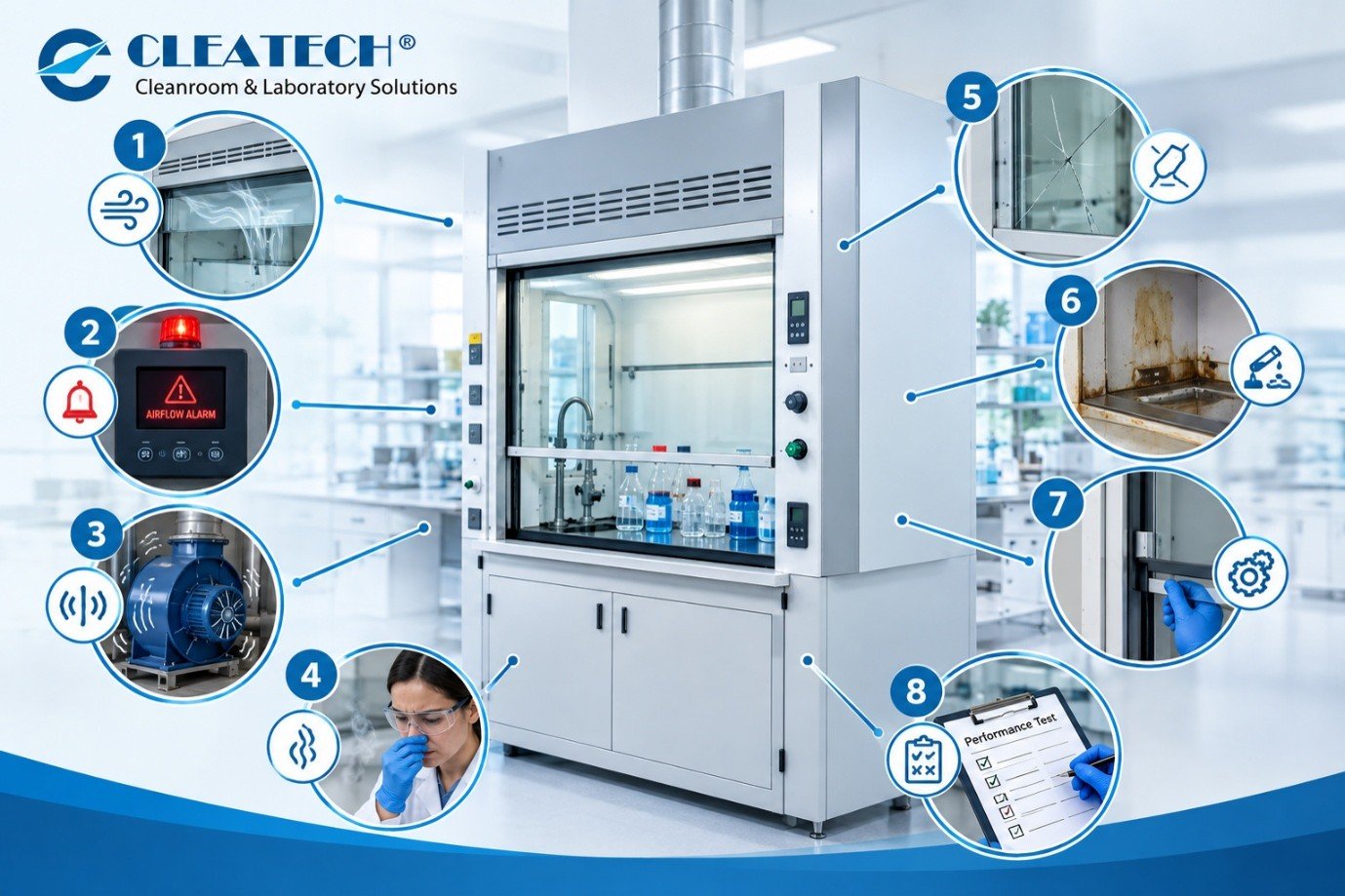
1. Weak or Inconsistent Airflow
One of the most important warning signs is a noticeable change in airflow.
If your chemical fume hood normally provides consistent airflow but suddenly feels weaker or behaves differently, there may be an issue with the exhaust system, fan, ductwork, airflow controls, or another component.
Do not assume that the hood is functioning properly simply because the exhaust fan is running. A significant change in airflow should be reported and evaluated according to your laboratory’s safety procedures.
2. Frequent Airflow Alarms
Many modern fume hoods include airflow monitoring systems or alarms. These systems can alert users when airflow conditions move outside the expected operating range.
A recurring alarm should not simply be ignored or repeatedly reset. It may indicate an airflow or exhaust-system problem that requires further investigation.
If your chemical fume hood displays a persistent or unexpected alarm, follow the manufacturer’s operating instructions and your facility’s safety procedures.
3. Unusual Noise or Vibration
A change in the sound or vibration produced by the hood or exhaust system can also indicate a developing problem.
Grinding, rattling, humming, or unusual vibration may be associated with mechanical wear, fan problems, loose components, or other issues within the ventilation system.
Because the source may not be immediately apparent, avoid attempting unauthorized repairs. Instead, report the problem so qualified personnel can determine whether inspection or maintenance is required.
4. Chemical Odors Are Noticeable Outside the Hood
Unexpected chemical odors around the laboratory work area can be a reason to investigate the performance of your chemical fume hood.
Odors may indicate that vapors are not being adequately contained or exhausted. However, odor should never be considered a reliable measurement of exposure because some hazardous substances may have little or no detectable odor.
If you notice unexpected odors during laboratory operations, follow the appropriate chemical safety procedures and have the equipment evaluated when necessary.
5. Damaged Sash or Glass
The sash is an important part of a fume hood’s containment system. Cracked glass, damaged framing, malfunctioning tracks, or other visible damage can interfere with normal operation.
Check the sash and other accessible components regularly. If the sash becomes difficult to operate, does not remain in its intended position, or shows visible damage, report the problem promptly.
For laboratories requiring specialized chemical containment, you can also review CleaTech LLC’s ducted polypropylene fume hood options for applications requiring chemically resistant construction.
Explore Chemically Resistant Polypropylene Fume Hoods
If your laboratory handles chemicals that can contribute to corrosion or material deterioration, a chemically resistant hood construction may be worth considering. Explore CleaTech’s ducted polypropylene fume hood options for laboratory applications requiring durable, chemically resistant construction and effective exhaust configurations.
6. Visible Corrosion or Material Deterioration
Chemical exposure can cause corrosion, discoloration, or deterioration of surfaces and components inside a fume hood.
The extent of deterioration can depend on the chemicals used, their concentration, exposure duration, temperature, cleaning practices, and the materials used to construct the hood.
Visible corrosion should not be dismissed as a cosmetic issue. It may indicate that a component requires cleaning, repair, replacement, or further evaluation.
7. The Sash Becomes Difficult to Move
A sash that sticks, drops unexpectedly, becomes unusually difficult to raise or lower, or fails to remain in its intended position may indicate a mechanical problem.
Issues involving tracks, guides, counterbalance systems, or other components can affect normal operation.
Never force a malfunctioning sash. Follow your laboratory’s equipment-reporting procedure and arrange for appropriate inspection or service.
8. The Chemical Fume Hood Fails a Performance Test
A failed inspection or performance test is one of the clearest indications that further evaluation is needed.
Depending on your laboratory’s requirements, testing may assess airflow, containment, alarms, or other performance characteristics. The test result alone may not identify the underlying cause, so qualified personnel should determine the appropriate corrective action.
Keeping inspection and maintenance records can also help laboratories track equipment performance over time.
When Should You Stop Using a Chemical Fume Hood?
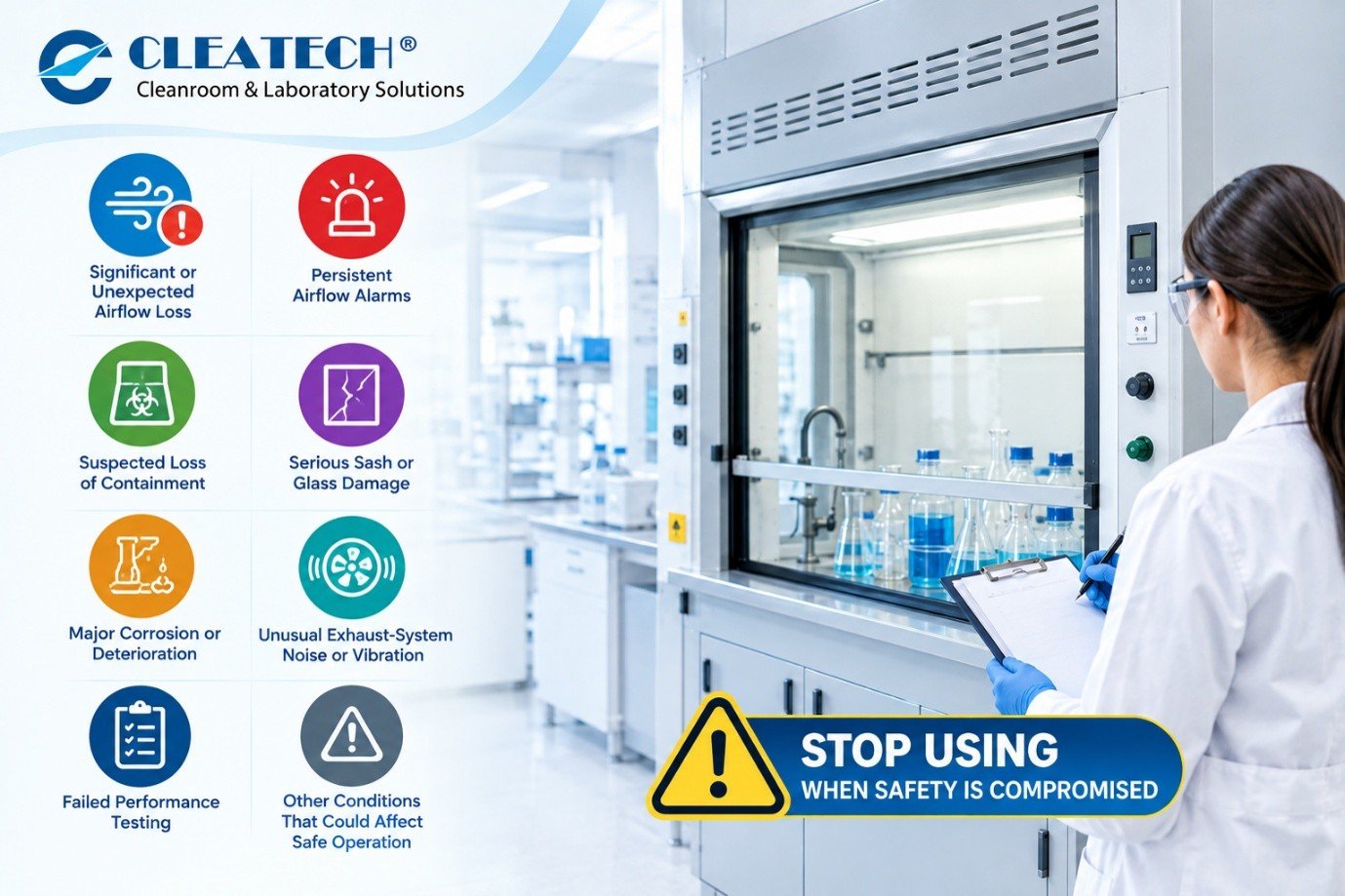
Not every minor issue requires immediate removal from service, but significant changes in performance should never be ignored.
A chemical fume hood may require immediate inspection or removal from service according to your laboratory’s procedures when you experience:
- Significant or unexpected airflow loss
- Persistent airflow alarms
- Suspected loss of containment
- Serious sash or glass damage
- Major corrosion or deterioration
- Unusual exhaust-system noise or vibration
- Failed performance testing
- Other conditions that could affect safe operation
Your laboratory should have clearly defined procedures explaining when a hood must be taken out of service and who is authorized to inspect or repair it.
How Can You Prevent Fume Hood Problems?

Proper operation and preventive maintenance can help identify potential problems before they become more difficult to address.
Follow these practical habits when using a chemical fume hood:
- Keep the interior clean and organized.
- Avoid unnecessary storage inside the hood.
- Keep materials from blocking airflow pathways.
- Operate the sash at the recommended position.
- Monitor airflow indicators and alarms.
- Report unusual odors, sounds, vibration, or airflow changes.
- Check visible components for signs of damage or deterioration.
- Follow scheduled inspections and performance testing.
- Follow the manufacturer’s maintenance recommendations.
- Use the hood according to its intended application.
If your laboratory requires a different configuration, you can compare portable and ductless fume hood solutions for applications where a conventional ducted setup may not be suitable.
Maintenance requirements can vary depending on the hood design, exhaust configuration, chemicals handled, frequency of use, installation environment, and applicable laboratory procedures.
Find a Flexible Fume Hood Configuration for Your Application
Not every laboratory can accommodate a conventional ducted fume hood. When installation requirements or laboratory layouts call for another approach, explore CleaTech’s portable and ductless fume hood solutions to identify equipment suited to your specific workspace and application requirements.
Why Proper Fume Hood Selection Matters
Maintenance alone cannot compensate for equipment that is unsuitable for the intended application.
Before selecting a chemical fume hood, consider the types of chemicals being handled, required containment, exhaust requirements, available installation space, materials of construction, sash configuration, and laboratory workflow.
CleaTech LLC offers a range of laboratory equipment designed for different laboratory environments and applications. Selecting equipment based on your specific requirements can help support appropriate laboratory workflows and maintenance practices.
Keep Your Chemical Fume Hood Performing as Intended

A chemical fume hood requires more than simply switching on the exhaust system. Airflow, mechanical components, containment performance, alarms, and physical condition all deserve attention.
Weak airflow, persistent alarms, unusual noises, escaping odors, damaged sashes, corrosion, mechanical problems, and failed performance testing are important warning signs that should be investigated.
Prompt reporting, routine inspections, preventive maintenance, and correct operating practices can help laboratories identify potential problems early.
If you are evaluating laboratory ventilation or containment equipment, contact CleaTech LLC for guidance on selecting suitable laboratory equipment for your application.
Contact us today to discuss your laboratory equipment requirements.
Frequently Asked Questions
1. What are the main warning signs of a chemical fume hood problem?
Common warning signs include weak airflow, recurring alarms, unusual noise or vibration, unexpected chemical odors, damaged components, corrosion, sash problems, and failed performance testing.
2. Why is airflow important in a chemical fume hood?
Proper airflow is an important part of the hood’s intended containment and exhaust function. Changes in airflow can indicate an issue with the hood, exhaust system, controls, or related components.
3. Can chemical odors indicate a fume hood problem?
Unexpected odors outside the hood may indicate a potential containment or ventilation concern. However, odor is not a dependable measure of exposure because some hazardous chemicals may not have a detectable odor.
4. How often should a chemical fume hood be inspected?
Inspection and testing frequency depends on applicable requirements, manufacturer recommendations, facility procedures, and the hood’s application. Laboratories should maintain an appropriate documented inspection schedule.
5. When should a chemical fume hood be taken out of service?
A hood may need to be taken out of service when significant airflow problems, persistent alarms, serious damage, suspected containment failure, or other conditions could affect safe operation. Follow your laboratory’s established safety procedures.